Getting Off the Bullseye
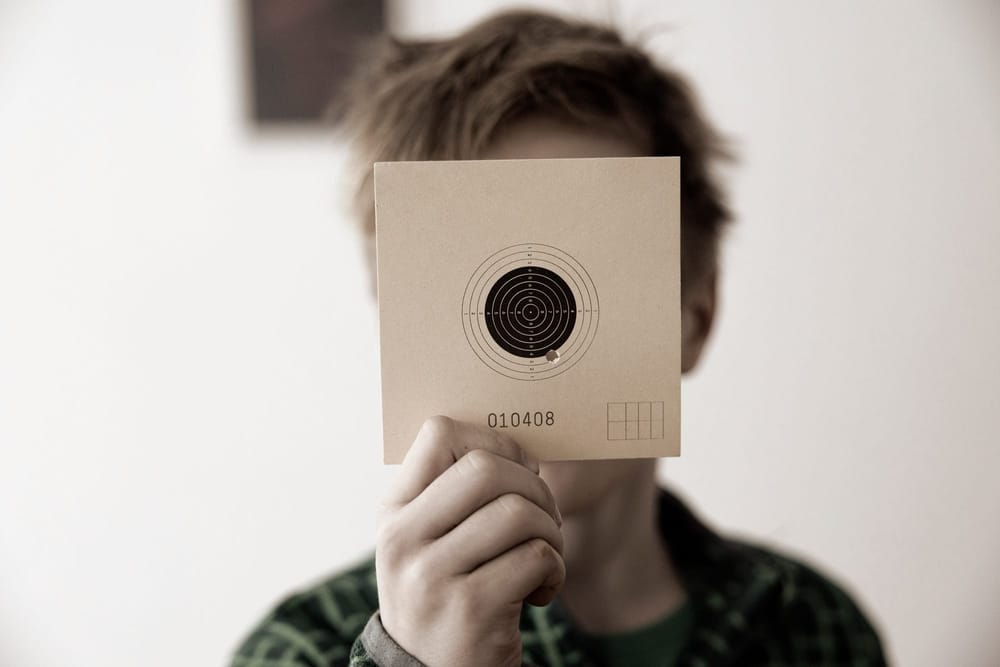
Engine Off
Trailhead ten feet away. Hands on the wheel. Not moving.
Not deciding. Not resting. Just the particular stillness of a body that's run the calculation and isn't ready to pay yet.
That pause isn’t indecision. It’s a protection pattern. The part of us that learned stopping is safer than stepping wrong.
I’ve sat in that pause hundreds of times. Never naming it until Sheryl’s piece (linked below), she calls it the “angry girl protector”. The part of us that twists logic into a blunt instrument to keep anything from getting too close.
The one that shuts things down before they can get close enough to hurt us.
Our protector doesn't pace. It goes to eleven. Or it grips the wheel.
When It Landed
She found her way through a therapy room. A psychologist who asked "what logic?" at exactly the right moment and something snapped loose.
I found mine through hiking, fishing, motorcycles. Neither her or my path is cleaner. Both require showing up to something that costs.
What stopped me wasn't the framework. It was recognition. The angry protector isn't a concept. It's the body that won't get out of the car even when it drove itself to the trailhead. Even when it wants to go.
That's not weakness. That's decades of adaptation still running a program that kept you alive. Because nobody ever handed us the off switch.
It’s the same reflex that once kept us out of real trouble. Still firing in situations that aren’t the same anymore.
The Latchkey Translation
Sheryl mapped three parts that were never properly introduced to each other. Angry protector. Tender core. Adult awareness.
The angry protector I know best. The grip on the wheel. Already ran every scenario before you finished the thought. It predicts cost faster than we can feel desire. And usually chooses safety.
It mastered stillness under incoming fire and we never got the memo the war ended decades ago. Still bracing. Still scanning. Still calculating cost before agreeing to move.
The tender core is harder to catch. Shows up at mile two when the jaw unclenches without deciding to, and breath does something different. Not softer exactly. Just less performed. It’s the part that actually wants things. Connection, movement, something beyond just getting through.
Adult awareness is the part that can notice both without having to fix either. The part that can choose, instead of just react. Step three feet off the path onto different ground. The benefit of having different inputs? Things can recalibrate. Without having to be asked to, without force.
I'm not sure either of us were looking for a practice. Perhaps we're just looking for a way through.
Same Terrain
Most of us will never walk into a therapy room. That strong reflex against it was trained on real data: adults who lied, institutions that failed, promises that dissolved, and all the costs left for us to pay. So that skepticism? It isn't dysfunction. It's fieldcraft we had to learn to survive.
But the body doesn't care about the delivery system.Whether it’s a therapist’s office or a trailhead, it’s the same system, finally learning it’s not under threat anymore.
The angry protector showed up in her psychologist's office. Mine shows up at trailheads. Same part. Different room.
What I seem to keep finding on terrain: the protector doesn't need to be defeated. It needs recognition. It needs to be shown the perimeter has been quiet for a while. Nobody's inside the wire, we can breathe now.
For some of us it was the hood, for others a forward operating base. Different geography, same nervous system output. Anything outside extreme hyper-vigilance registers as danger.
The car door opens eventually. Not because the calculation changed. Because something in the system finally registers that it doesn’t have to grip that hard anymore. Because underneath all that fieldcraft, the body still remembers another way of moving through a day.
Just notice what loosens.
Connective Tissue:
→ Fieldcraft for the Feral Generation
→ Before There Were Practices
→ Aliveness at the Edge
Also Related:
→ What Regulation Made Possible
→ Blackberries & Grace
Sheryl's Piece:
 Sheryl
← Back to Inner Trailcraft
* peer reflections: not medical or therapy advice. *



Member discussion