Adaptive Trailcraft: Hiking with RA & Lupus
Morning Check In
The body tells the truth first thing in the morning.
I check in before I check the weather. Where did my joints settle overnight? Are my ankles stiff? Knees warm or tender? Can my feet flex enough to handle descent? Are my hips or glutes tight?
Some mornings, my joints tell me clearly: not today. On those days, I either stay home or opt for an easy, level-ground walk in a nearby park. Preserving capacity comes before distance.
I move slowly through gentle stretches and ankle/foot mobility drills, noticing what hurts and what's functional. I warm up the knees and hips, checking the range of motion I have today. Descending requires more flexibility than ascending, so if ankles or knees aren't cooperating, I stay home.
Then I check the weather.
For me, cold and humidity make RA worse. The heat and too much sun (strong midday-afternoon UV) makes Lupus worse than it has to be. No matter how tempting the trailhead, if the conditions are unfavorable, I don't go. Weather and temperature extremes in either direction means I'm usually staying home.
Identifying limitations early prevents setbacks later. Sometimes the body says no.
Adapting in Real Time
At the trailhead, I notice the temperature. A breeze moves through, cooler than I expected. My knees register it before I fully process it.
Step by step, the trail tests the kinetic chain: feet, ankles, knees, hips. RA or Lupus flare means joints can betray you quickly. Each step becomes a negotiation between what's safe and what feels risky.
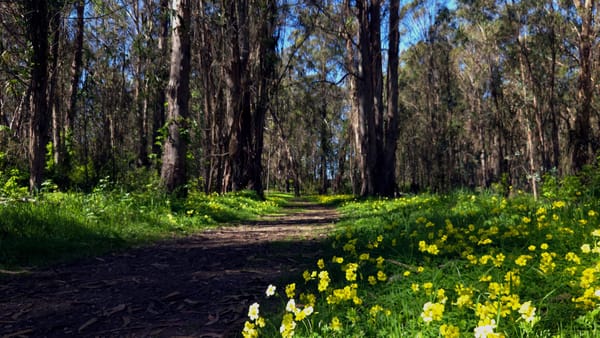
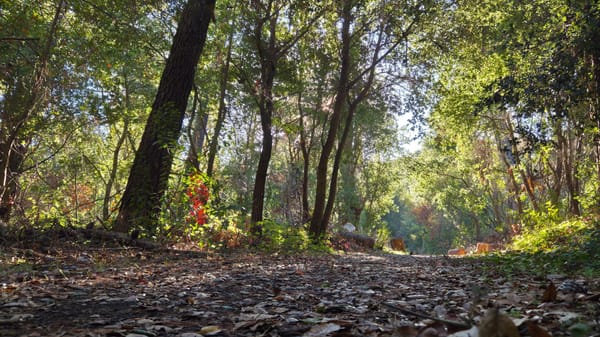
I move with awareness, letting the trail guide how I step. Soft ground where possible. Watching for roots or uneven surfaces that demand extra stability. Adjusting stride and foot placement to protect capacity.
This Is Not a How-To
Bodies differ. Conditions differ. What helps me may not help you.
What is transferable is the mindset:
Notice the signal.
Identify what worsens it.
Respond before the body forces you to stop.
Shit still happens - sometimes the body doesn't follow your lead.
For me, that took years to develop. A dysregulated system shaped by chronic illness and early life stress creates noise in the body and mind. Learning to read signals wasn't natural. It was rehabilitation.
What Protected
I respected limits, warmed up deliberately, checked my feet, ankles, knees, and hips, checked the weather, and kept early or urban walks as my safe option. I protected my capacity for the rest of the day.
With RA and Lupus, success isn't distance or gain. It's continuity. Staying in relationship with movement without triggering collapse.
Stay responsive. Protect your capacity. The trail will still be there.
Safety Note
This is my individual, personal experience, not medical or therapy advice. If something spikes pain or panic, stop. Stabilization beats bravado. Work with a practitioner who respects your pace.
← Back to Adaptive Trailcraft


Member discussion