
Monkey Arms
The 1970 Dodge Satellite was fine both times, my neck, not so much.
I've had c-spine trouble since I was four, from a bad car accident, then another one at seven. Seat belt laws were definitely not a thing in the 70s. My father never tried and my mother's arm wasn't strong enough. If you know, you know.
I spent a lot of time in and out of a neck brace as kid. Had plenty of primitive PT that resulted in multiple re-injuries. Isn't the 70s nostalgic that way?
A life in the trades didn't help matters. Neither did the remote alpine scrambling en route to my favorite fishing holes. Or the half a day on my motorcycle to get to that trailhead.
Yeah, I know, actions, consequences.
Try telling a teenager about any of that, good luck.
Desperation Teaches
So, I found this how I've learned most things about my own body. Not through a doctor, through being desperate. Enough to try to learn something outside the institutional orthodoxy bubble.
C4/C5 spinal compressions don't negotiate. They just lean on the nerve root feeding your shoulder, your arm, and your hand. And it just takes whatever it wants. Before I found hanging, what it took was dexterity.
I was dropping tools I'd used my whole life without thinking about them. Work that required precision started requiring something I no longer reliably had.
I'd already tried the obvious things. Neck traction devices, the kind you put on like some kind of medieval torture. Let it pull, hoping to buy the nerve root some room. They do a different job than what I'm about to describe, and they didn't touch this.
Of Apes and Shoulders
There’s an Orthopedic Surgeon, John M. Kirsch, who argues something simple. That humans are the fifth great ape, and the other four still swing from trees. We stopped a few million years ago, but we kept the shoulder built for it.
His claim is that a lot of shoulder impingement comes from losing that overhead, load-bearing motion. That you can get some of it back just by hanging from a bar.
Not a stretch you perform. A position you let gravity do the work in.
The mechanism is mechanical, not mystical. Kirsch argues that when you hang, the upper arm bone leans into a spot at the top of the shoulder and opens space. The same space that gets pinched shut in impingement.
Palms forward, not a chin-up grip, because the grip matters for which way the shoulder bone rotates.
What It Did and Didn't Do
What it did was quiet the downstream mess, the nerve pain, the numbness, and dexterity loss. From a shoulder that was inflamed and pinched on top of everything else happening at the neck.
It didn't touch the compression itself. That's an upstream cervical problem, the source, hanging isn't going to reaching up there.
Two different problems. Two different levers. I still have the second problem.
The first one, as it turns out, I can manage every day.
Baseline
30 seconds to a minute at a time, working up to three minutes total. Some days that's nothing. Some days it's a real fight to get there.
Most days, like today, it's neither. Just the thing you do, not a chore, a habit.
If I skip it, the numbness and the nerve pain come back. So does the dexterity loss.
Not eventually. Fast.
Maintenance, Not Surgery
This falls into the same category as everything else in my catalog of things that may or may not resolve.
Simply options that may improve quality of life. A mechanism I can point to.
A surgeon who noticed the same thing about shoulders that apes have known forever.
That if you stop hanging, you lose what hanging gave you.
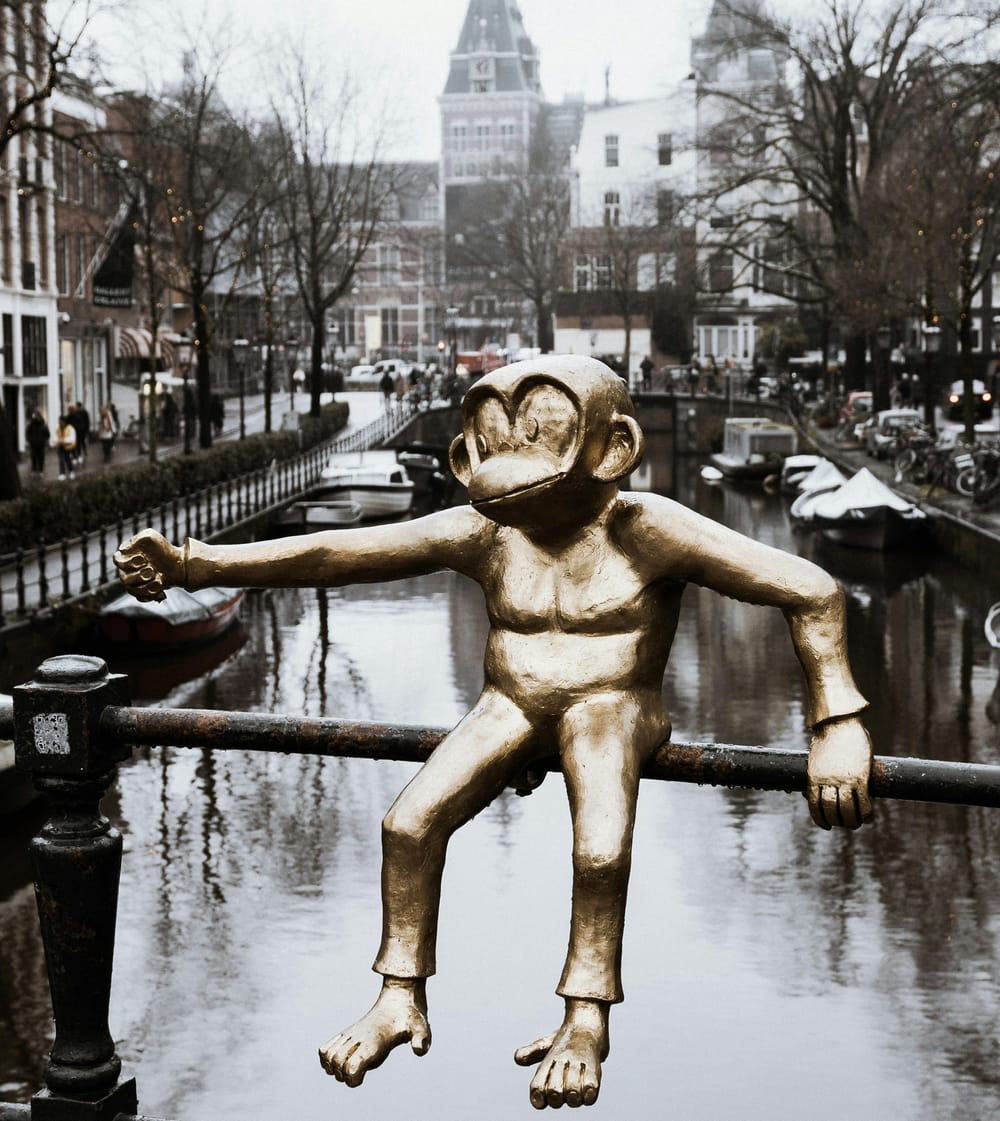
Hang like a monkey to keep it.
Gravity is free.
His E-Book on Amazon:
Shoulder Pain? The Solution & Prevention: Fifth Edition Revised and Expanded
→ Share this with someone looking for another way through.
More on the way → Subscribe free for new posts delivered by email
Trail Crossings & Waypoints:
 S. Rolling
 S. Rolling

 S. Rolling
If this earned a place in your kit, there's a → Tip Jar
← Back to Trail Provisions
* Peer reflection, not medical or nutrition advice. Your body is yours — what works for me may not work for you. *





Member discussion