Dead Reckoning
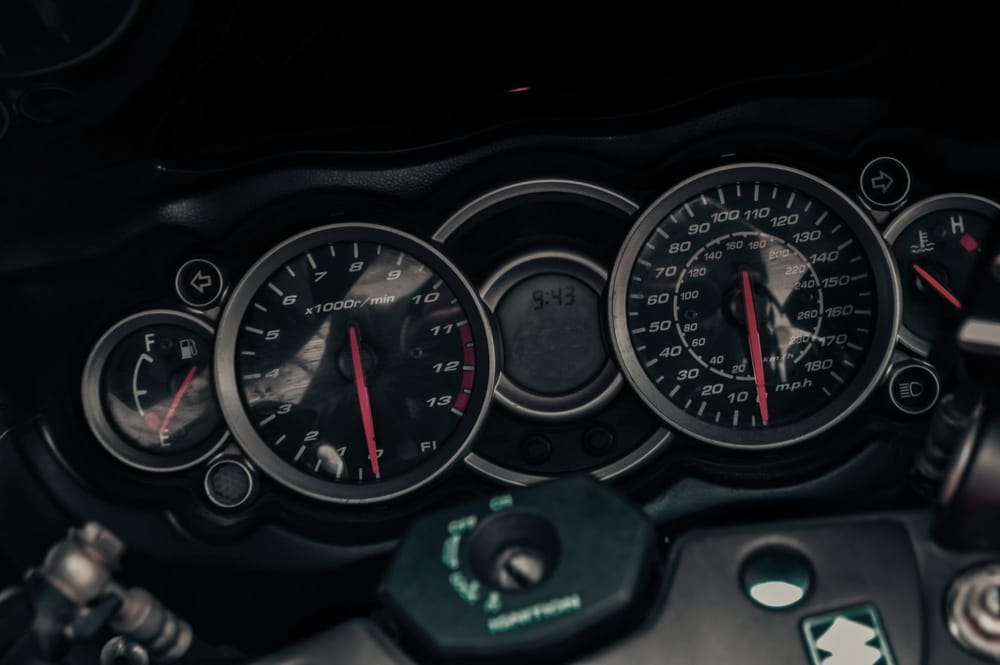
Most people who don't seek help in time aren't being reckless. They're working with instruments that are out of calibration. This is how I missed something that should've been impossible to miss...
In 2016, I presented with a spontaneous subdural hematoma: a brain bleed without a precipitating blow to the head. Also, a 16mm midline shift, how far my brain was pushed over from pressure.
Three times the threshold for emergency surgical intervention.
I strolled into the ER with a two-week-old untreated brain bleed...
Literally a dead man walking.
The Get Down
Before discharge, the surgeon wanted to understand why I hadn't come in sooner. Said most people can't tolerate more than a few minutes of that kind of pressure.
I work in the trades. We work through everything.
Decades of that script had done something specific and potentially lethal. Not just developing a high-functioning threshold for pain...
When everything reads elevated, nothing reads critical. An adaptation that removes the ability to tell the difference between something that will pass and something that will kill you.
That's what chronic load does to a nervous system.
The gauges don't redline. They just stop meaning anything.
The Record
They couldn't take me into surgery right away and it wasn't because of the bleed.
BP at 220 over 160, pulse 160, with liver, kidneys, and heart about to quit. At 4:27 a.m. the ICU team came in and told me, in so many words, I was cooked. They asked who I wanted them to call. Obviously I didn't kick, much to the surprise of the entire team. I stabilized on my own around 7:30 a.m. and was fit for surgery.
Months later, my primary pulled the ICU chart and found what had been sitting there the whole time. Cortisol, epinephrine, norepinephrine, all consistently through the roof. To the point they considered pheochromocytoma (adrenal tumors) as an explanation.
I had been in a fight or flight state since I was four years old.
Not a metaphor. A lab result.
Before the ICU that day, my body did four things it never did: Day sleep, fall down, black out and puke.
Still I almost didn't go for help.
That's not toughness or being stubborn. The gauges were so far out of calibration the body couldn't discern between discomfort, pain, or death.
Childhood Connection
Adverse childhood experiences aren't bugs, they're defining features of Gen X: chronic stress, instability, neglect and for some, unabated violence. They don't just leave psychological marks, they imprint the autonomic nervous system. Elevated cortisol, a dysregulated threat response, and a baseline that runs high for decades.
The ACE research is extensive and consistent. Higher the score, greater the risk for chronic illness, autoimmune conditions, and cardiovascular disease in adulthood.
You don't have to identify with trauma. It finds you. People running high-threshold systems just thought it was normal. Thinking everyone pushed through the same way.
It's not normal, it's lethal. Ask me how I know.
The nervous system doesn't distinguish between the threat that's gone and the one that isn't there anymore. It just keeps running the program.
The Pause
The question worth asking isn't can I push through this. That answer is almost always yes, and it proves nothing.
The question is whether what you're feeling is actually happening. Or if your adapted normal has been doing the interpreting all along.
The time between the ICU and those neighborhood walks wasn't a recovery. It was a different kind of fight. Meds and providers making it worse and enough gaslighting for a lifetime. By late 2018 it was clear: if things were going to change, I had to be the one to make it happen.
Neighborhood walks came first, just being outside brought the volume down enough to hear underneath it. Twenty to thirty minutes in a natural setting measurably lowers cortisol. It is not some wellness slogan, but a documented physiological response.
I didn't get back on trail until 2024. I still can't always tell whether something is worth acting on or worth moving through. There's no protocol here. Just steps, literally.
Sometimes I'm right. Sometimes I'm wrong.
It's recalibration in progress: slow, nonlinear, never quite finished.
The ICU was the loudest data point, but it wasn't the first. The harder question isn't why the instrument failed. It's what convinced me the readings were fine. In retrospect, it was never examined because the performance was still holding. Something that looks a lot like competence.
Further Reading
→ The ACE Study (Felitti et al., 1998) — Foundational research linking adverse childhood experiences to adult chronic disease.
→ ACEs and Autoimmune Disease (Dube et al., 2009) — Each additional ACE increases autoimmune disease risk by roughly 20%. An ACE score of 2 or more raises hospitalization risk by 70-80%.
→ Interoception and Chronic Pain (Frontiers in Psychology, 2024) — The research behind why the instrument loses its range, and why it can be retrained.
→ Inside Interoception: The Hidden Sense of How You Feel Inside (MIT Technology Review, 2026) — What the body's internal signaling system actually is, grounded in current Harvard research. Readable without a science background.
→ A 20-Minute Nature Break Relieves Stress (Harvard Health, 2019) — The research on what time outside actually does to cortisol levels, and how much you need for it to matter.
→ Reconnecting to the Wisdom Within (Living Proof, 2026) — Practical starting points for rebuilding body-signal awareness, written for people already in the middle of it.
→ Share this with someone looking for another way through.
More on the way → Subscribe free for new posts delivered by email.
Connective Tissue:
→ Trauma-Illness Connection: Your Body Isn't Broken, It's Adapted
→ Fieldcraft for the Feral Generation
→ Act Zero: Prologue
Related:
→ What We Carry: Distinguishing Protection from Habit
→ Healing Terrain
→ The Ground You Lose
Also:
→ Layer One: Start Where You Are
→ Sleeping On Childhood Cortisol
→ Raising the Floor: Tools That Helped Me Function Again
← Back to Inner Trailcraft
* Peer reflection, not medical or nutrition advice. Your body is yours — what works for me may not work for you. *


Member discussion