Surprise Equals Incoming
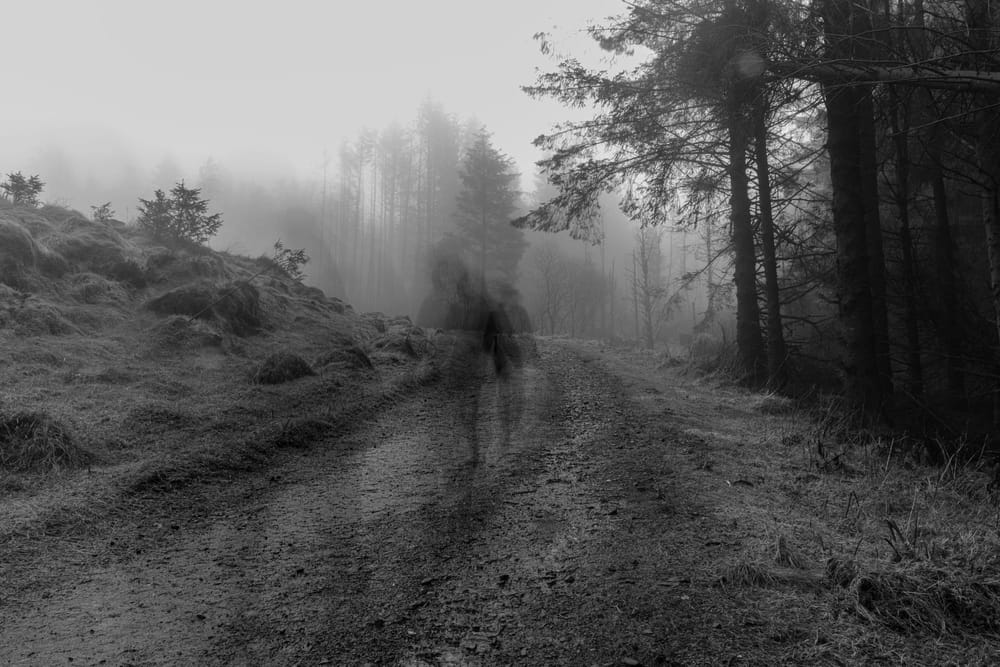
The fog where I grew up taught me to scan what I couldn't see. My brother taught me why.
We lived near the ocean, where the fog rarely lifted before afternoon. Dense and enveloping, weather with a weight.
On this day, we were at a bus stop on a street I didn't need to be on, waiting for a bus I had nowhere to go on. I was six and brother J had been tasked with looking after me.
An hour earlier he'd come up behind me, no warning, no sound. Snatched me up like a rag doll and thrown me from wall to wall. Then just walked away, the way weather moves on.
This wasn't something he developed, it was etched in him and repeated outward. He came from the same house, spit out of the same machinery, just broken differently under it. What moved between us was the only language that environment had given either one of us.
I still flinch at sudden movement. At 57, I still nearly jump out of my skin when someone comes up behind me unexpectedly. My body filed that lesson and never unfiled it. Surprise equals incoming. An equation written long before that moment and never fully revised.
At the bus stop, after he'd wailed on me, J came up behind me again. Same hands, different offering.
He made me smoke a cigarette. I hated it and of course I got sick. He made me do it again and again... Until somewhere in those repetitions I stopped hating it and started to feel something else.
That was the point. Not the cigarette. The something other than feeling.
Then it was weed and drink too. By the late '70s I was ten years old and already fluent in the only soothing language available to me.
It found the one thing that turned the volume down, offered by the same person who had turned it up an hour before. There was a strange joy in it, giggles and munchies. There was a loosening of something always braced. It was relief that rarely got through any other way. It was also the closest thing to care that came from him.
Pain and reach in the same morning from the same hands.
The nervous system doesn't have a column for that. When the hand that hurts also reaches, the body stops trying to tell them apart. And then it spends decades trying to sort the mess.
By twenty I could see it clearly enough to stop. Cold turkey, all of it.
That's not addiction. It's the substrate addiction grows in.
What I didn't understand then was that stopping the substance didn't touch the substrate. The wire was still running. It just found other things to move through.
It's why comfort still feels like a scan and why warmth still carries a question. The body learned early that what follows hurt might be an offering. And what follows an offering might be more hurt.
I remember my brother calling my name from behind once. Nothing in it, just volume and proximity. I still turned sharp, already halfway into a reaction I couldn't have explained in the moment.
From the inside, it didn't feel like reaction, it felt like timing. Like something had already been decided.
So I go to the woods. Not to practice anything. Because that's where I'm most alive, and the body has always known it. The startle comes, and out there, it passes. Not because I'm working on it. Because I'm there and still alive.
Surprise doesn't have to mean incoming.
→ Share this if it stayed with you, brought something into focus, or helped you feel less alone. Someone else may need it too.
More on the way → Subscribe free for new posts delivered by email.
Connective Tissue:
→ Addiction as Fieldcraft
→ Trauma-Illness Connection
→ What the Nervous System Never Forgot
Related:
→ Fieldcraft for the Feral Generation
→ What Regulation Made Possible
→ The Accent of Self‑Blame
Also:
→ Layer One: Start Where You Are
→ Sleeping On Childhood Cortisol
→ Put Your Body to Bed Like You Love It
← Back to Root Work
* peer reflections: not medical or therapy advice. *




Member discussion